Public Sector Collective Bargaining
This is your dedicated place to find public sector collective bargaining updates. This page will serve as your central hub for the latest information on the ongoing collective bargaining process. Here you will find updates, key milestones, and important announcements, so be sure to check back regularly for the most up-to-date information.
What We’ve Done So Far & What to Expect
1. Serving Notice to Bargain
As part of the process of negotiating new collective agreements or renewing existing contracts, the union has taken one of the first formal steps by serving the employer with notice to bargain. This is a legal action that initiates the bargaining process. This notice must be served at least 30 days before the expiry of most of our collective agreements, which is set for March 31, 2026.
The notice to bargain is an important step as it signals the beginning of formal negotiations with government. It also marks the start of legal obligations for both the union and the employer to meet and engage in the bargaining process. Serving this notice is just the first move in a lengthy process. We are committed to keeping our members informed throughout the process.
2. Component Conventions & Forming Negotiating Teams
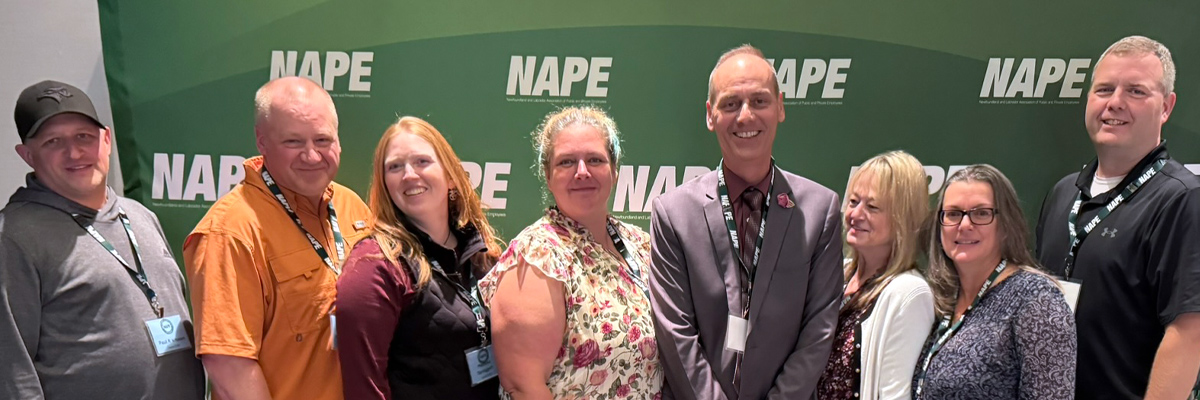
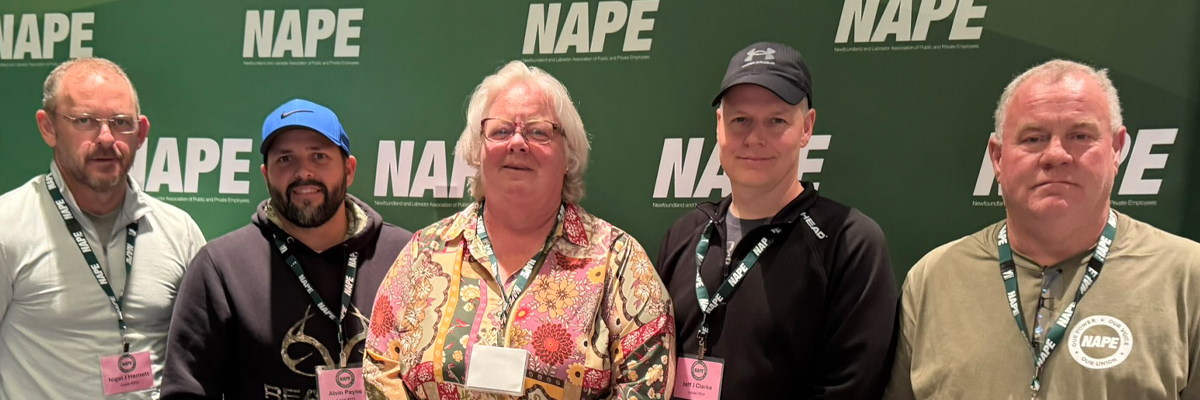
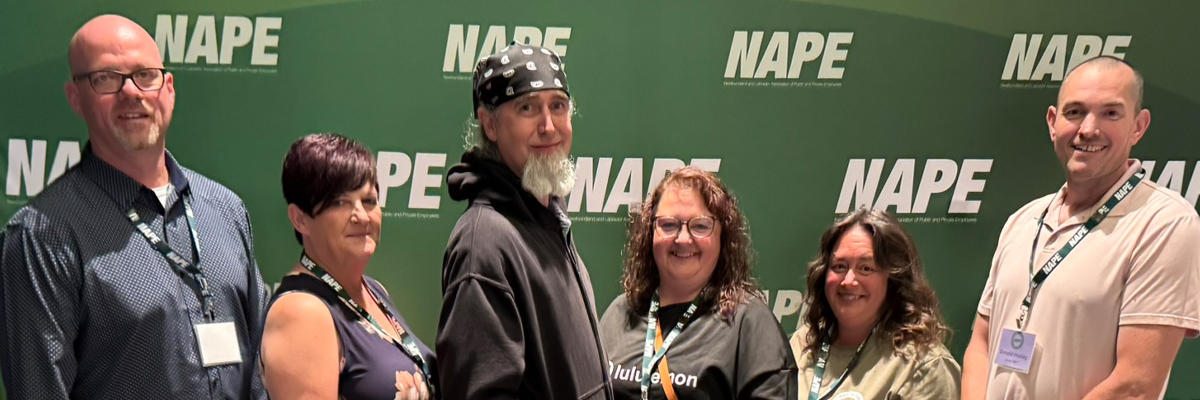
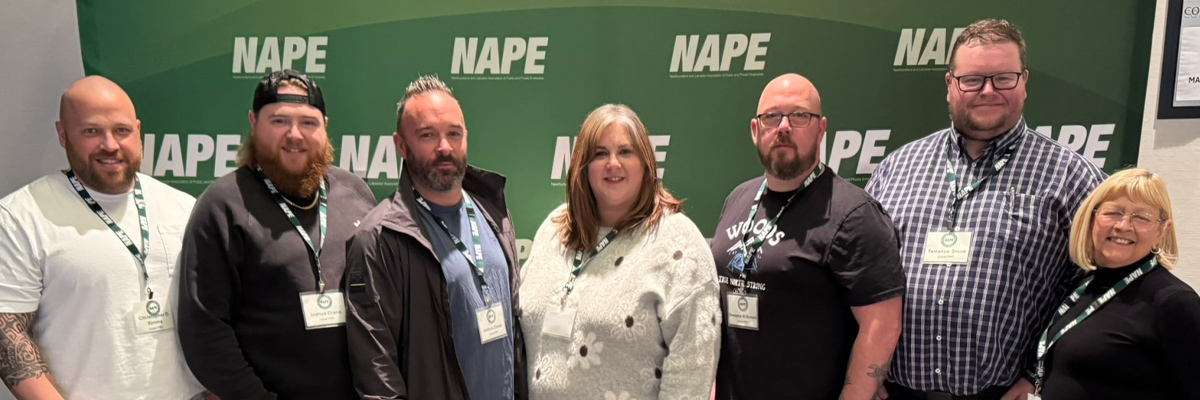
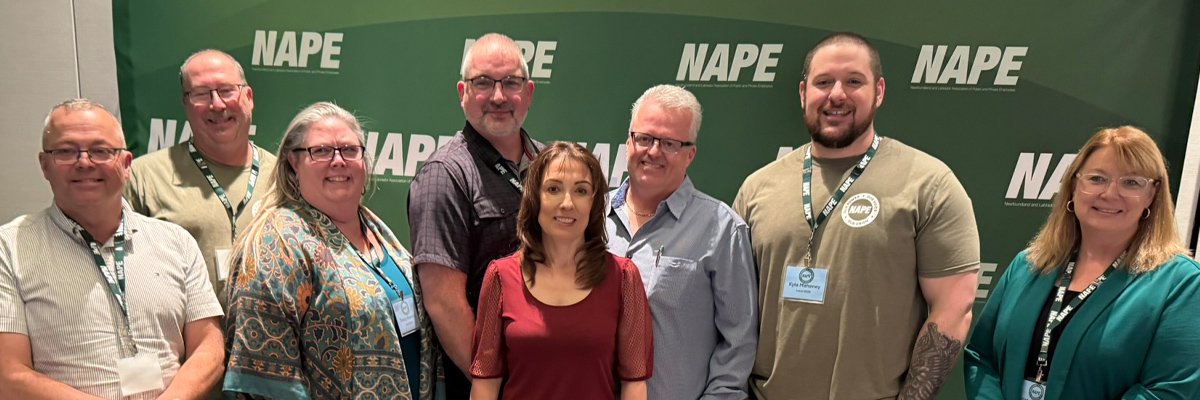
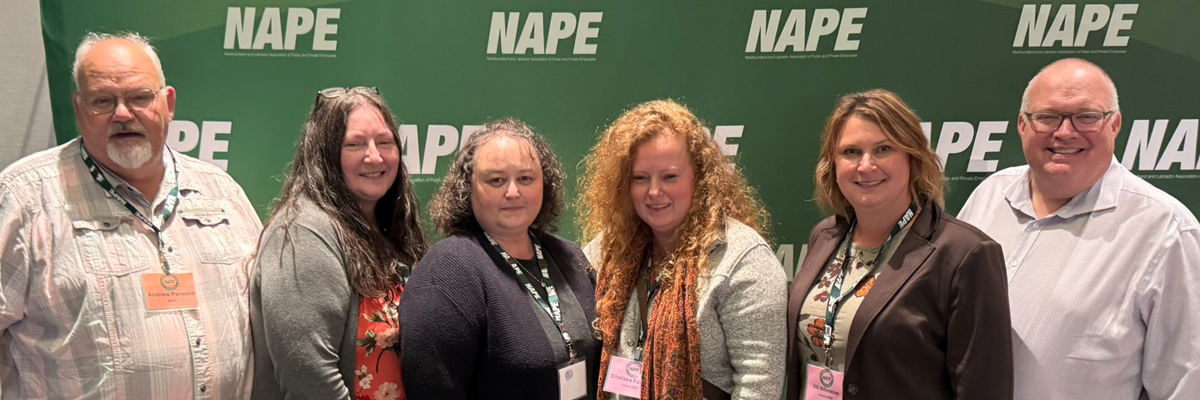
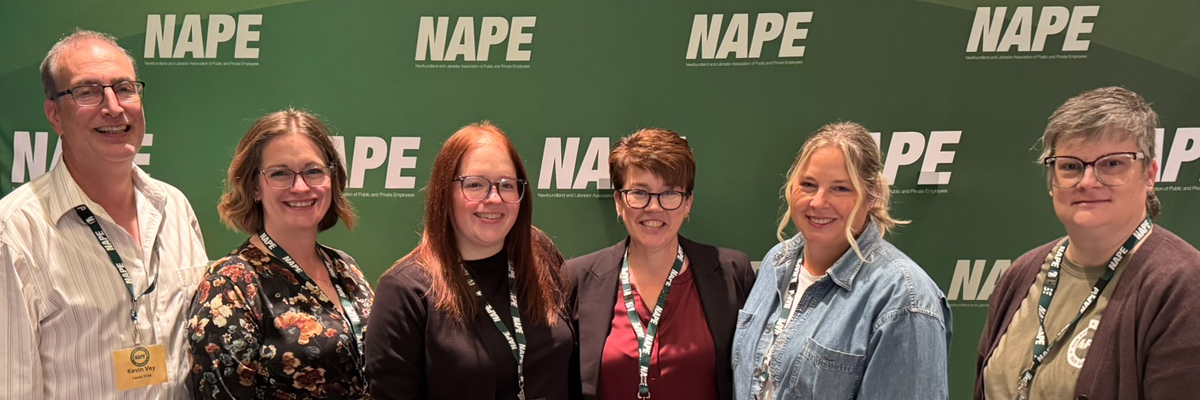
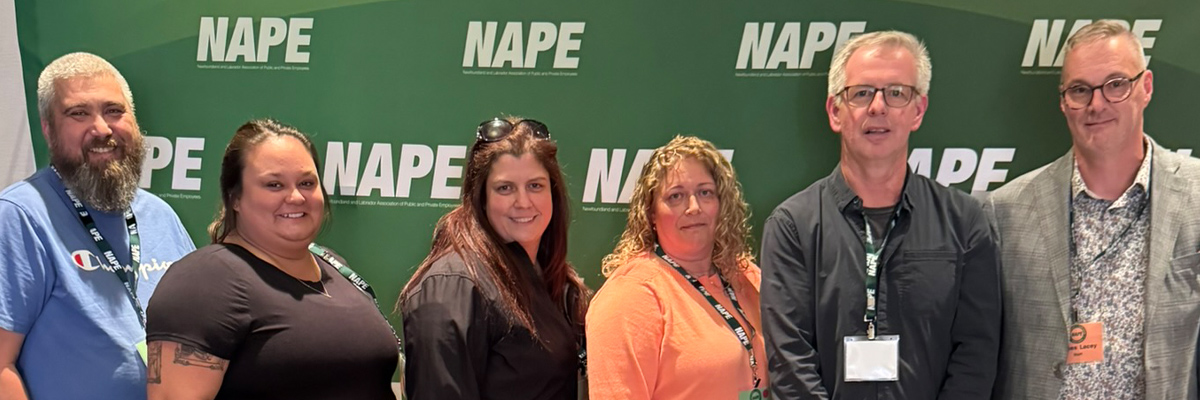
This past fall, hundreds of NAPE delegates from across Newfoundland and Labrador gathered at multiple NAPE Component Conventions. These conventions are vital as they give our members an opportunity to identify the priorities that will guide the union’s work throughout the collective bargaining process. During these conventions, members elected negotiating teams and voted on resolutions specific to each component. These elected teams are now hard at work preparing for what will likely be a challenging round of public sector bargaining.
Electing negotiating team members is a democratic and transparent process that ensures the members of each bargaining unit’s negotiating team have been elected by their peers.
3. Preparing for the Negotiating Table
With the election of a new provincial government and the appointment of key officials in the Ministry of Finance and Treasury Board, we now have greater clarity about the bargaining environment. This clarity is crucial since it allows us to fine-tune our strategies and ensure we are fully prepared for the upcoming negotiations.
Between now and the start of formal bargaining, there is still significant work to be done. Negotiating teams are meeting to finalize proposals. Your union is committed to ensuring the negotiating teams are fully prepared to represent our members effectively at the table.
What’s Next?
1. Strategic Discussions and Meetings
One of the next steps in the bargaining process will involve key meetings like the NAPE negotiating team meetings scheduled for this week. They will provide important updates, outline the anticipated bargaining timeline, and focus on the critical strategic discussions that will shape our approach. It is essential for us to be aligned and informed before we sit down at the table with government.
The work we do in the weeks and months ahead will lay the foundation for a successful bargaining process. The strength of our position at the negotiating table will depend heavily on our preparation and unity.
2. The Importance of Staying Informed
We will continue to update this page with the latest information as the process moves forward. Public sector bargaining does not simply begin when we sit down across from government. It starts now with the hard work of NAPE’s negotiating teams.
Every step we take now is part of building a stronger foundation for upcoming negotiations.
3. Stay Tuned for More Updates
As we move forward, we will be providing regular updates on the status of public sector bargaining. Whether its new developments, milestones reached, or key negotiations, this page will contain the latest information.
While the collective bargaining process is strictly confidential, and negotiating team members are not allowed to disclose what is discussed at the bargaining table, NAPE will keep you informed about when meetings with the employer are taking place and where we are in the collective bargaining process. Be sure to check back regularly.
In the meantime, thank you for your ongoing commitment and solidarity.
Together, we are stronger. Together, we will ensure our voices are heard in this crucial round of bargaining.
In Solidarity,
NAPE Public Sector Negotiating Teams
FAQs (Frequently Asked Questions)
Q. What NAPE Bargaining Units Are Involved?
A. NAPE has 16 public-sector bargaining units that are currently negotiate together. They are:
- Air Services
- College of the North Atlantic Faculty
- College of the North Atlantic Support Staff
- Corrections
- General Service
- Group Homes
- Health Professionals
- Health Services
- Lab and X-Ray
- Maintenance and Operational Services
- Marine Services
- Newfoundland Labrador Liquor Corporation
- School Boards
- Student Assistants
- Ushers
- WorkplaceNL
Q. What is collective bargaining, and why is it important?
A. Collective bargaining is the process unions use to update and improve their contracts with employers. It determines how contract negotiations between the union and the employer take place. Collective bargaining is important because your bargaining unit’s contract determines your pay, benefits, working conditions, and how disputes between bargaining unit members and the employer are handled.
In Newfoundland and Labrador, public sector collective bargaining is covered by the Public Service Collective Bargaining Act.
Q. How does public sector collective bargaining work within NAPE?
A. Local Meetings
Within NAPE, public sector collective bargaining starts at the Local level. Each Local in your bargaining unit holds a meeting that is open to everyone in the Local. At that meeting, members elect their Local’s delegate(s) to Component Convention. Members also present any changes they would like to see made to the contract. These proposed changes are debated and voted on.
Component Conventions
The delegates elected at Local meetings attend Component Convention where they elect the members of your bargaining unit’s negotiating team. They also debate and vote on the proposed changes to your contract submitted by the Locals in your bargaining unit and NAPE’s provincial Board of Directors.
Developing Your Bargaining Unit’s Initial Proposal to the Employer
Prior to the start of collective bargaining, your negotiating team will develop a proposal based on the proposed changes to the contract passed at your bargaining unit’s Component Convention. It will address wages and other monetary issues as well as issues specific to your bargaining unit. Your negotiating team is supported throughout the process by a NAPE staff member with experience in collective bargaining and knowledge of your bargaining unit.
Serving Notice to Begin Collective Bargaining
Collective bargaining begins when either NAPE or the employer serves notice to begin collective bargaining. This must happen at least 30 days before your contract expires.
NAPE served notice to begin collective bargaining on February 25, 2026. .
Negotiations
Once notice to begin collective bargaining is served, your bargaining unit’s negotiating team will meet with the employer’s negotiating team to exchange proposals. The two teams will meet multiple times to exchange and discuss each other’s proposals. This process is likely to take months.
Developing Your Bargaining Unit’s Initial Proposal to the Employer
Prior to the start of collective bargaining, your negotiating team will develop a proposal based on the proposed changes to the contract passed at your bargaining unit’s Component Convention. This initial proposal will address wages and other monetary issues as well as issues specific to your bargaining unit. Your negotiating team is supported throughout the process by a NAPE staff member with experience in collective bargaining and knowledge of your bargaining unit.
Conciliation
If the employer refuses to bargain fairly, the next step is usually to ask the Minister of Labour to bring in a neutral third-party (a conciliator or moderator) to help move negotiations along.
Voting on a Tentative Agreement
When your negotiating team believes it has reached the best deal possible, this tentative agreement will be presented to the members of your bargaining unit for a vote.
In order to vote, you must have a NAPE membership card, and NAPE must have your up-to-date contact information.
Before voting takes place, each member of your bargaining unit will receive a comprehensive information package. There will also be an information session with your negotiating team. Members will have plenty of time to ask questions before voting takes place.
Voting is conducted online and by phone.
If the majority of members in your bargaining unit who vote on the tentative agreement vote to accept, your new contract is ratified.
If the majority of members in your bargaining unit who vote on the tentative agreement vote to reject, your negotiating team will ask the employer to return to the table. For that to happen, the employer must agree. While it is likely the employer will agree, it is not guaranteed.
The Strike Vote
After exhausting the conciliation process, if your bargaining unit’s negotiating team believes the employer isn’t prepared to bargain fairly, they will not hesitate to conduct a strike vote.
Members of each bargaining unit vote to determine if their own bargaining unit is prepared to strike.
In order to take part in a strike vote, you must have a NAPE membership card, and NAPE must have your up-to-date contact information.
Often having a strike mandate is enough to convince the employer to return to the table with a better offer, but sometimes bargaining units actually have to go on strike to get a fair offer.
Q. Who decided which members serve on my bargaining unit’s negotiating team?
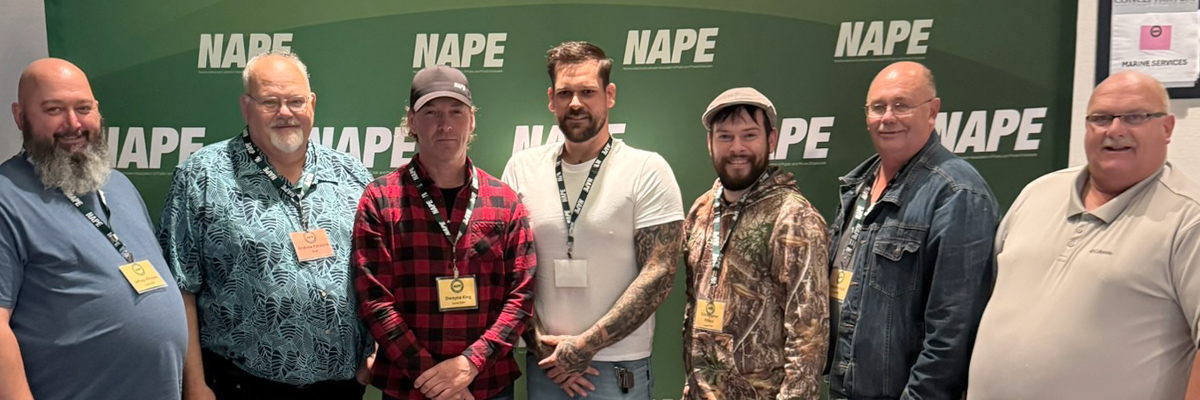
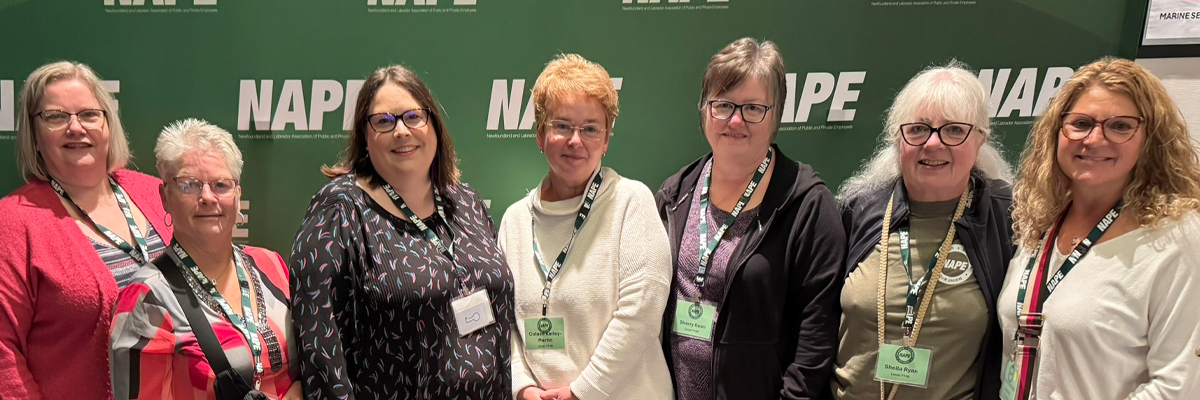
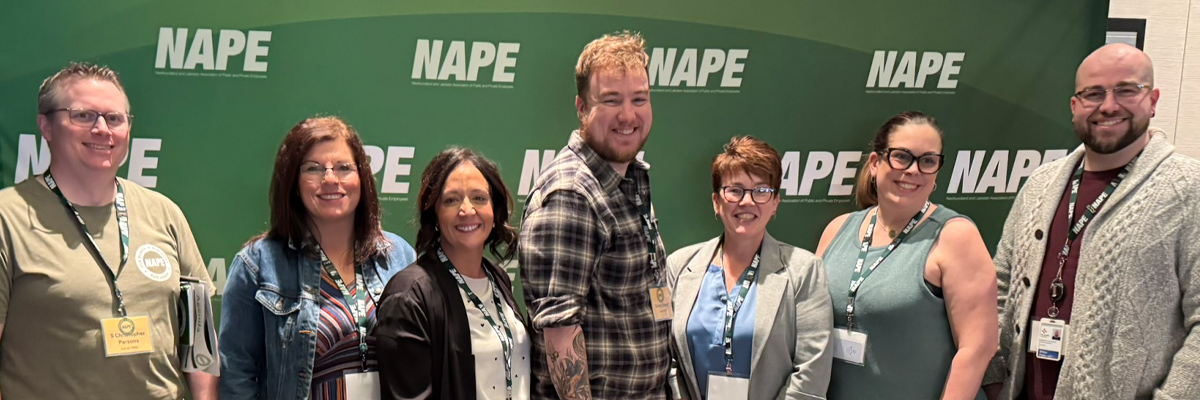
A. Months before contract negotiations began, each Local in your bargaining unit held a meeting that was open to every member in the Local. Members attending that meeting elected your Local’s delegate(s) to Component Convention. At Component Convention, which was held in October 2025, delegates elected by every Local in your bargaining unit voted to elect the members of your bargaining unit’s negotiating team.
Each bargaining unit that takes part in public sector collective bargaining has its own negotiating team made up of democratically elected members.
Q. Once my contract expires, how does NAPE protect me?
A. Your bargaining unit’s current contract remains in effect until a new contract has been negotiated, voted on, and passed by the members of your bargaining unit.
Q. How does public sector collective bargaining start?
A. Prior to the expiry of your contract, either NAPE or the employer serve notice that they want negotiations to start. Unless NAPE and the agree otherwise, within 30 days your negotiating team will have its first meeting with the employer’s negotiators. NAPE served notice on February 25, 2026.
Q. Who gets to vote on my contract?
A. When your negotiating team reaches a tentative agreement, only the members of your bargaining unit are allowed to vote on it.
Q. What is conciliation?
A. Sometimes the two sides just can’t reach an agreement. When that happens, usually the Minister of Labour brings in an impartial conciliator or mediator to help the process along.
Q. What happens if conciliation doesn’t work?
A. If either of NAPE’s bargaining teams believe the employer isn’t prepared to bargain fairly, they will not hesitate to conduct a strike vote among the members of their bargaining unit. Strike votes are conducted online and by telephone. NAPE can begin to conduct a strike vote 14 days after the Minister of Labour receives the report for the conciliator.
Under the Public Service Collective Bargaining Act, Correctional Officers do not have the right to strike, nor can their employer lock them out. If the Correctional Officers’ negotiating team is unable to negotiate an acceptable contract, the matter is sent to binding arbitration. An impartial arbitrator or panel of arbitrators will evaluate both sides’ positions and impose a contract.
With the exception of Correctional Officers, members of each bargaining unit vote to determine if their own bargaining unit is prepared to strike. In order to take part in a strike vote, you must have a NAPE membership card, and NAPE must have your up-to-date contact information.
Sometimes when a bargaining unit gives NAPE a strike mandate, that’s enough to persuade the employer to improve its offer. But should the employer refuse to bargain fairly, NAPE is well positioned to strike.
The Public Service Collective Bargaining Act requires the union to wait 7 days after it informs the Minister of Labour that your bargaining unit has voted to strike before a strike can begin.
Q. How is voting conducted?
Votes on tentative agreements and strike votes are conducted online and by phone. In order to vote, you must have a NAPE membership card, and your personal contact information must be up to date. You can request a membership card or update your contact information by visiting NAPE’s website – NAPE.ca – or calling 1-800-563-4442 and asking for the Membership Department.
Before voting takes place, each member of your bargaining unit will receive a comprehensive information package. There will also be an information session with your negotiating team. . Members have plenty of time to ask questions before voting takes place.
Q. What if my bargaining unit rejects the tentative agreement?
A. If the majority of members in your bargaining unit who vote decide to reject the tentative agreement, your negotiating team will ask to return to the table. For that to happen, the employer must agree. While it is likely the employer will agree, it is not guaranteed.
Q. Do Correctional Officers have the right to strike?
A. In this province, provincial public-sector collective bargaining is governed by the Public Service Collective Bargaining Act.
Under this Act, Correctional Officers cannot strike, and the employer cannot lock them out. If the Correctional Officers’ negotiating team is unable to negotiate an acceptable contract, the matter is sent to binding arbitration. An impartial arbitrator or panel of arbitrators appointed by the Minister of Labour will evaluate both sides’ positions and impose a contract.
Q. Will there be a strike?
A. While most NAPE contracts are negotiated successfully, if your bargaining team believes the employer isn’t negotiating fairly, it will not hesitate to call for a strike vote. (The Public Service Collective Bargaining Act prohibits Correctional Officers from striking and their employer from locking them out.) Should the majority of members in your bargaining unit vote to strike, this may be enough to persuade the employer to improve its offer. But if the employer still refuses to bargain fairly, and your bargaining unit ends up on strike, all of NAPE’s resources – including one of the largest strike funds in Canada – will be there for you.
Q. What are essential workers?
A. All NAPE members perform essential work. Under the Public Service Collective Bargaining Act, however, members of Air Services, the General Service, Health Professionals, Health Services, Lab & X-Ray, Maintenance and Operational Services, and Marine Services bargaining units are deemed to provide essential services. The legislations dictates that the employer can only class a service as essential if removing it would endanger the life, personal safety, or health of at least part of the population. Before NAPE can hold a strike vote for either of these bargaining units, we must have an essential services agreement in place with the employer that specifies how many members in which classifications are required to work in the event of a strike.
Q. What information will I receive about negotiations?
A. During negotiations, the employer monitors everything NAPE and NAPE members say, including what is said on social media. They are looking for information about NAPE’s bargaining strategy and for any sign of weakness they can exploit. So NAPE must do everything it can to maintain a unified front in public. We must all speak with a strong, collective voice.
While NAPE will share information with members, like the dates on which meetings with the employer are held, we have to avoid sharing too much. As well, throughout negotiations both the union’s and the employer’s positions are constantly shifting. We know from decades of experience that sharing partial information or information that’s subject to change can contribute to members’ confusion and dissatisfaction.
While talking about specifics during bargaining isn’t allowed because the process is confidential, your negotiating team is hard at work. NAPE will let you know when meetings are happening and where we are in the process.
NAPE is committed to ensuring you have all the information you need before voting on a tentative agreement, and to ensuring you have time to ask questions before you vote.
Q. Where can I get information about negotiations?
A. The primary source of information about public sector negotiations is this webpage. You may also be emailed or sent physical mail with information about an upcoming vote.
Q. When Does My Contract Expire?
A. The current contracts for 13 of the public-sector bargaining units expire March 31, 2026, while the Marine Services contract expires May 31, 2026, the Group Homes contract expires June 30, 2026, and the College of the North Atlantic Faculty contract expires August 31, 2026.
Q. How Long Does Public-Sector Collective Bargaining Take?
A. Collective bargaining for 16 different public-sector groups often takes many months, but it is time well spent to ensure our members get the best deal possible. Not only is NAPE negotiating wages and major benefits for all sixteen groups, each bargaining unit’s team also works hard to negotiate items that are important to their members.